Category: Development of Quality Infrastructure systems and services
We open our toolbox!
The demand for competent and experience-based advice in the field of quality infrastructure has increased continuously in recent years. PTB International Cooperation has developed numerous formats that address very different target groups. We are pleased to make this offer accessible. Our aim is to impart knowledge about quality infrastructure and to improve the corresponding services in such a way that they are competitive, support the economy and promote trade. Environmental and health aspects are included in the holistic approach. Enjoy browsing.
Category: Development of Quality Infrastructure systems and services
1 of 5
Category: Development of Quality Infrastructure systems and services
2 of 5
Category: Development of Quality Infrastructure systems and services
3 of 5
Category: Development of Quality Infrastructure systems and services
4 of 5
Category: Development of Quality Infrastructure systems and services
5 of 5
51 of 75 Pages
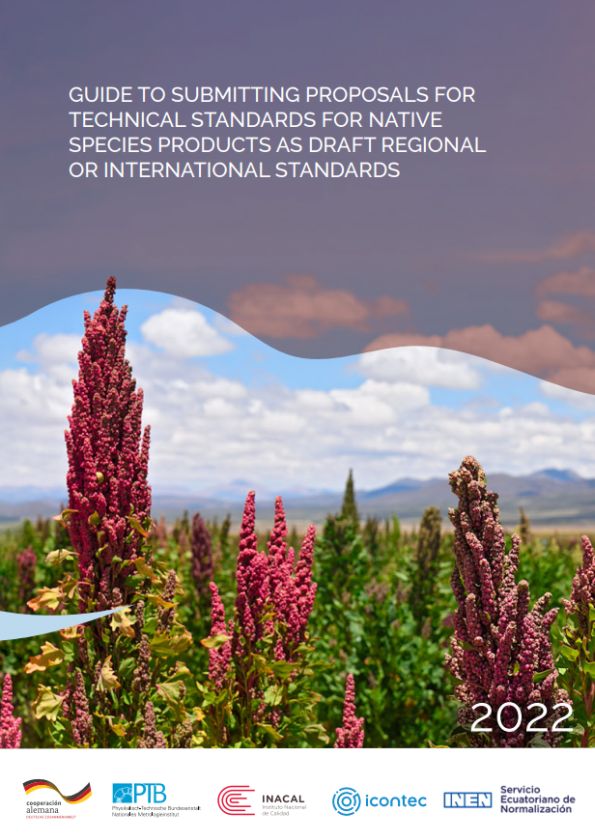
This guide provides a practical framework for developing and submitting proposals to establish international or regional technical standards for products, with a focus on Latin America and the Caribbean. Designed to support national standards bodies, regulators, producers, and other stakeholders, the document outlines methodologies for product characterization, market analysis, and sustainability assessment. It emphasizes the importance of biodiversity conservation and the inclusion of traditional knowledge in standardization efforts. By guiding countries through the processes required by international organizations like ISO and Codex Alimentarius, the guide seeks to enhance the visibility, competitiveness, and sustainable trade of native species products on the global stage. It also aims to strengthen quality infrastructure services that support biodiversity protection, climate resilience, and economic development.
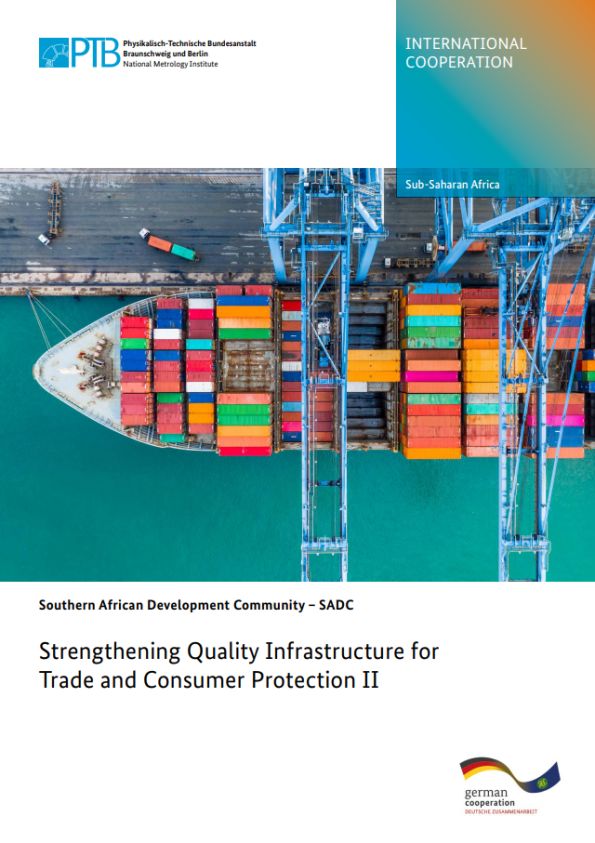
The document highlights the project which seeks synergy effects with other regional and bilateral PTB projects. The objective is to strengthen the Quality Infrastructure institutions to support free, fair, and safe trade in the SADC region which directly contributes to implementing the Agenda 2030 Sustainable Development Goals. The project promotes employment and economic growth (goal 8) and encourages regional and international trade as well as regional value creation (goals 17.6 and 17.10-12). It also develops capacities and capabilities at the regional and national levels.
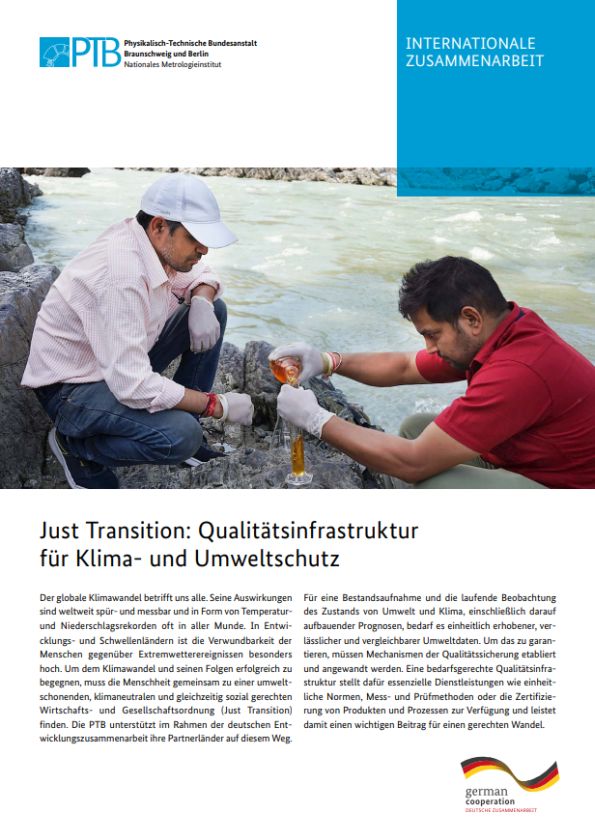
The document shows the importance of a functioning quality infrastructure for climate and environmental protection. Standardised, reliable and comparable environmental data is required for an inventory and ongoing monitoring of the state of the environment and climate. To guarantee this, quality assurance mechanisms must be established and applied. Climate change affects the entire world, but developing countries are particularly hard hit. In its international cooperation, PTB is therefore focussing primarily on building up expertise in its partner institutions.
This report presents the findings of a rapid assessment of Côte d’Ivoire’s national quality infrastructure (QI), conducted by the Physikalisch-Technische Bundesanstalt (PTB) in partnership with local and international experts. Utilizing the Rapid Diagnostic Tool (RDT), the evaluation covered nine key domains of QI—including standardization, accreditation, metrology, testing, certification, and technical regulation—along four pillars: legal and institutional framework, administration and infrastructure, service delivery, and external recognition. The assessment highlights the country's significant progress in establishing a foundational QI system and identifies critical gaps in autonomy, coordination, and technical capacity. Despite a robust legislative framework and operational institutions, challenges persist in aligning quality infrastructure with industrial policy, securing sustainable funding, and achieving full international recognition. The report concludes with targeted recommendations aimed at strengthening the effectiveness and global competitiveness of Côte d’Ivoire’s QI, thereby supporting its economic growth and integration into international markets.
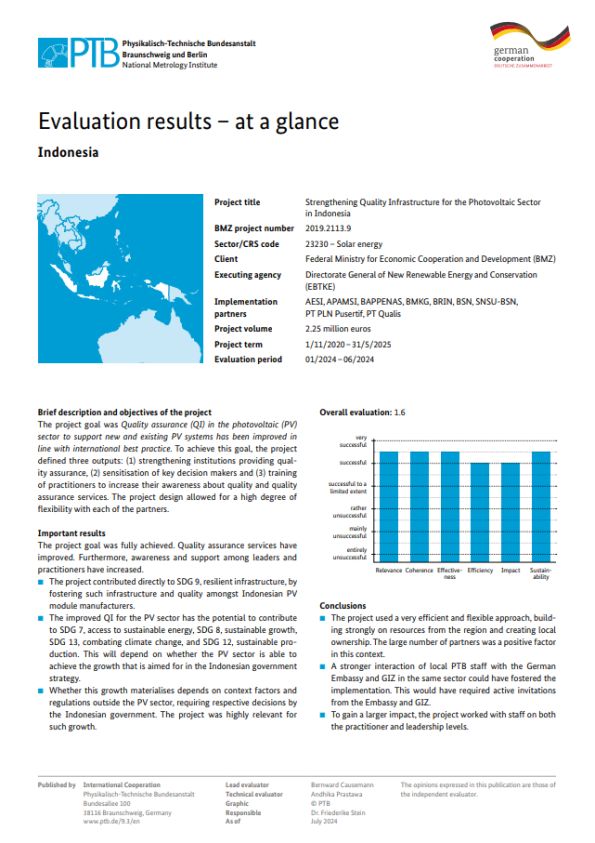
The project goal was to strenghten the Quality assurance (QI) of photovoltaic systems in line with international best practice. To achieve this goal, the project defined three outputs: (1) to strenghten institutions providing quality assurance, (2) to inform key decision makers and (3) to train practitioners to increase their awareness about quality and quality assurance services.
51 of 75 Pages

 Export Quality Management
The website presents publications related to the regarding the concept of “Export Quality Management”, created by the International Trade Centre (ITC) and PTB.
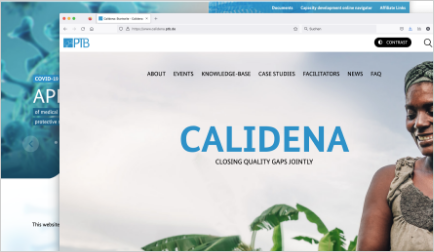
Calidena
The website presents information and publications related to CALIDENA, including a list of facilitators, studies and news.
SEE QI Fund Website
The website is dedicated to the Regional Consultancy Fund for Quality Infrastructure (SEE QI Fund) project and presents related information.
Capacity development online navigator
The Navigator contains many summaries of formats and experiences as well as practical tips and examples which will help you to better prepare and conduct your virtual events.
QI-Africa
The website presents information, news, and publications related to the "Upgrading of Quality Infrastructure in Africa" project.
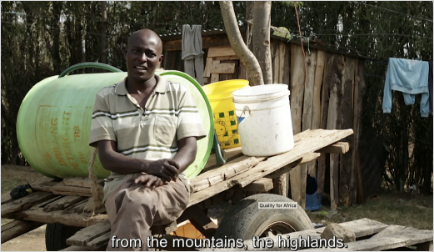 Export Quality Management
The video summarizes the Export Quality Management (EQM) seminars.
Calibrating infrared ear thermometers
Professionals test the accuracy of thermometers prior to sale, and often also perform regular metrological verification tests after the sale.
From the laboratory to sustainable concrete
As part of the Quality Infrastructure Fund project, PTB and Germany’s Bundesanstalt für Materialforschung und -prüfung (Federal Institute for Materials Research and Testing – BAM) created virtual tutorials on the topic of cement
From Farm to Market
The video shows what quality requirements there are for exporting fruit and vegetables in East Africa and how they can be met.
A world without quality infrastructure
Here we show both the effects of a lack of functioning quality infrastructure (QI) and the accidents that functioning QI can prevent.
Assuring Quality during Mango Juice Production – Inspection, Washing and Sorting
The video shows the first stage (inspection, washing and sorting) of mango juice production in Uganda and explains the crucial role of quality assurance.
Assuring Quality during Mango Juice Production – Processing and Pasteurizing
The video shows the second stage (processing and pasteurizing) of mango juice production in Uganda and explains the crucial role of quality assurance.
Assuring Quality during Mango Juice Production – Quality Tests and Packaging
The video shows the third stage (quality tests and packaging) of mango juice production in Uganda and explains the crucial role of quality assurance.