Category: Development of Quality Infrastructure systems and services
We open our toolbox!
The demand for competent and experience-based advice in the field of quality infrastructure has increased continuously in recent years. PTB International Cooperation has developed numerous formats that address very different target groups. We are pleased to make this offer accessible. Our aim is to impart knowledge about quality infrastructure and to improve the corresponding services in such a way that they are competitive, support the economy and promote trade. Environmental and health aspects are included in the holistic approach. Enjoy browsing.
Category: Development of Quality Infrastructure systems and services
1 of 5
Category: Development of Quality Infrastructure systems and services
2 of 5
Category: Development of Quality Infrastructure systems and services
3 of 5
Category: Development of Quality Infrastructure systems and services
4 of 5
Category: Development of Quality Infrastructure systems and services
5 of 5
50 of 75 Pages
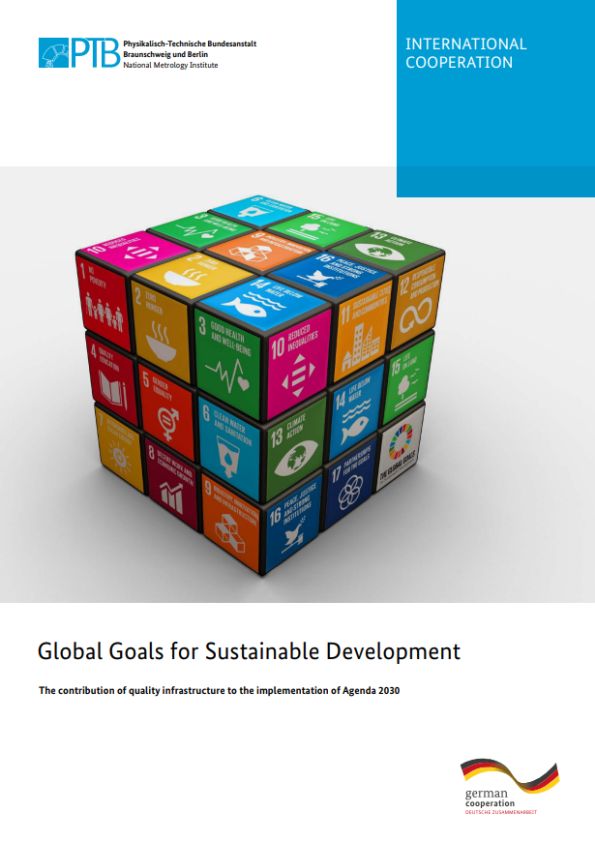
This document outlines the strategic contribution of quality infrastructure (QI) to the implementation of the United Nations 2030 Agenda for Sustainable Development. Prepared by the Physikalisch-Technische Bundesanstalt (PTB) on behalf of the German Federal Government, the report demonstrates how QI—encompassing metrology, standardization, testing, certification, and accreditation—plays a foundational role in achieving the 17 Sustainable Development Goals (SDGs). It illustrates sector-specific impacts across areas such as poverty reduction, food security, healthcare, education, gender equality, environmental protection, and economic growth. The report emphasizes that reliable QI systems foster safe products, fair trade, industrial competitiveness, and sustainable resource management. Through technical cooperation and institutional capacity building, PTB supports partner countries in establishing resilient, inclusive, and accountable infrastructure, thereby enabling their integration into global trade systems and regulatory frameworks. The study affirms that QI is indispensable for both national development and international cooperation in sustainable transformation.
This manual provides practical guidance for public sector personnel in MERCOSUR countries on how to design and implement energy efficiency (EE) plans in public buildings. Developed within the framework of the PTB-MERCOSUR project on strengthening quality infrastructure for energy efficiency, the document outlines a step-by-step methodology to improve energy management. It includes tools for analyzing utility bills and load profiles, conducting energy surveys, identifying major energy-consuming systems, and planning cost-effective EE measures. By promoting efficient energy use, the manual aims to reduce operational costs, cut greenhouse gas emissions, and support sustainable public administration. It encourages a culture of continuous improvement and institutional commitment to environmental responsibility.
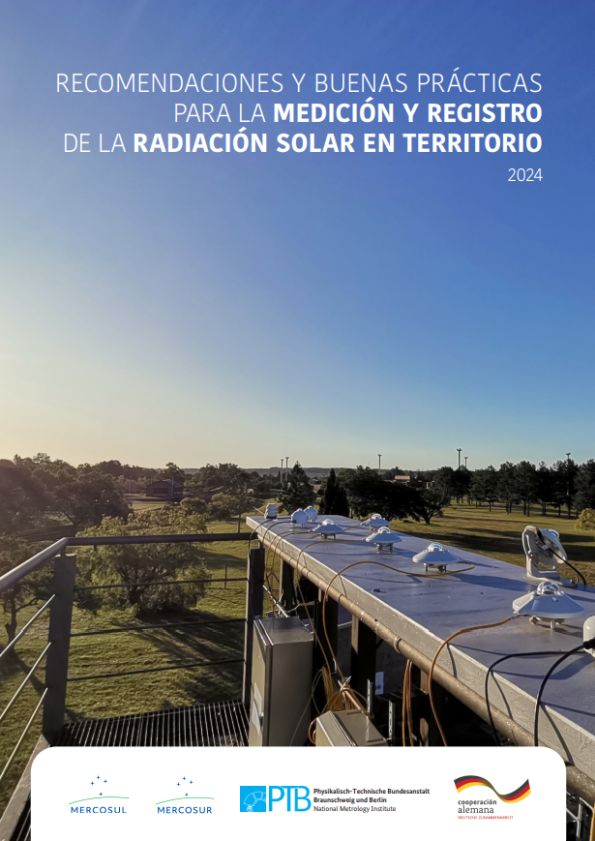
This guide provides standardized recommendations and best practices for the measurement and recording of solar irradiance in Latin America, with a focus on enhancing data quality for solar energy applications. Developed by a consortium of regional research institutions, the document outlines criteria for site selection, equipment installation, data acquisition, and calibration procedures for solar radiation monitoring stations. Emphasis is placed on minimizing measurement uncertainty, ensuring traceability to international standards, and promoting reliable data collection for the development of solar energy systems. The guide also proposes metadata standards and data-sharing formats to support collaboration and interoperability across the MERCOSUR region. By fostering robust and harmonized solar radiation measurements, the initiative aims to strengthen regional capacities and contribute to sustainable energy planning and policy.
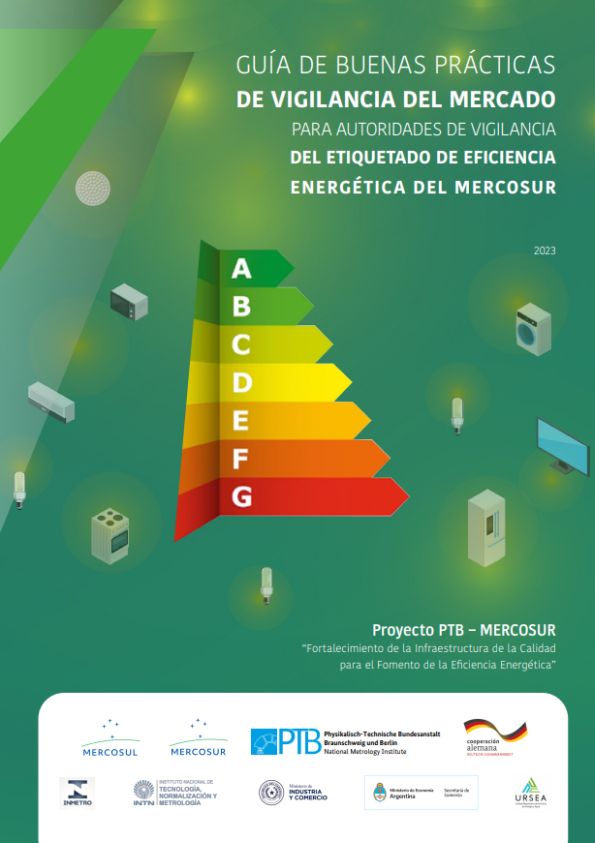
This guide outlines best practices for the use of virtual machines (VMs) in academic and research settings within the Universidad Nacional de Colombia. It addresses the deployment, configuration, security, and maintenance of VMs in cloud-based environments. The document emphasizes compliance with institutional policies, efficiency in resource management, and the importance of cybersecurity measures. It also introduces operational guidelines for the administration of virtual environments, aiming to optimize performance, ensure data integrity, and support academic initiatives. Recommendations are grounded in contemporary IT governance and sustainability frameworks.
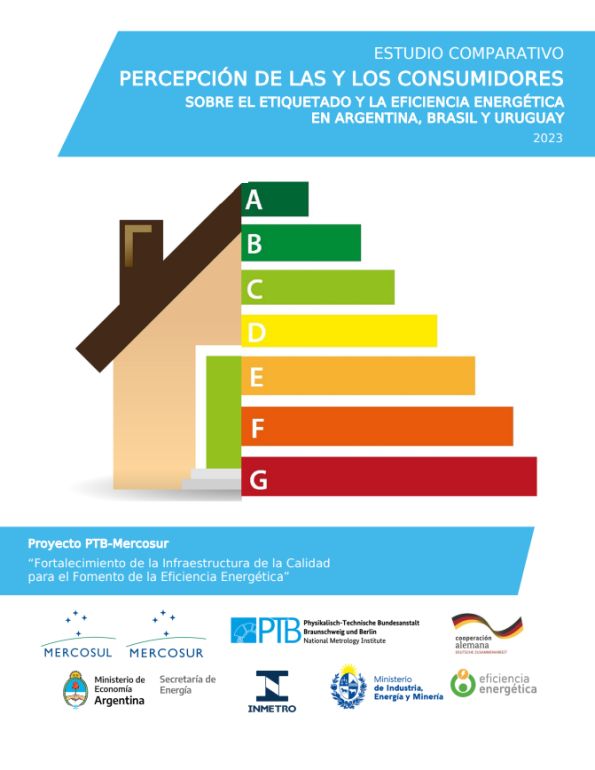
This comparative study investigates consumer perceptions of energy efficiency labeling (EEE) in Argentina, Brazil, and Uruguay. Through surveys conducted with over 3,400 participants who recently purchased household appliances, the study assesses the influence of EEE on purchasing decisions, comprehension of label content, and information-seeking behavior. Results reveal varying priorities in appliance selection across countries—such as brand in Brazil, product features in Argentina, and energy consumption in Uruguay—and highlight the significant role of sales personnel and internet sources in disseminating energy efficiency information. Despite generally high awareness of the EEE, gaps remain in consumer understanding and use, underscoring the need for enhanced public communication and education strategies to strengthen energy-conscious consumption in the MERCOSUR region.
50 of 75 Pages

 Export Quality Management
The website presents publications related to the regarding the concept of “Export Quality Management”, created by the International Trade Centre (ITC) and PTB.
Calidena
The website presents information and publications related to CALIDENA, including a list of facilitators, studies and news.
SEE QI Fund Website
The website is dedicated to the Regional Consultancy Fund for Quality Infrastructure (SEE QI Fund) project and presents related information.
Capacity development online navigator
The Navigator contains many summaries of formats and experiences as well as practical tips and examples which will help you to better prepare and conduct your virtual events.
QI-Africa
The website presents information, news, and publications related to the "Upgrading of Quality Infrastructure in Africa" project.
 Export Quality Management
The video summarizes the Export Quality Management (EQM) seminars.
Calibrating infrared ear thermometers
Professionals test the accuracy of thermometers prior to sale, and often also perform regular metrological verification tests after the sale.
From the laboratory to sustainable concrete
As part of the Quality Infrastructure Fund project, PTB and Germany’s Bundesanstalt für Materialforschung und -prüfung (Federal Institute for Materials Research and Testing – BAM) created virtual tutorials on the topic of cement
From Farm to Market
The video shows what quality requirements there are for exporting fruit and vegetables in East Africa and how they can be met.
A world without quality infrastructure
Here we show both the effects of a lack of functioning quality infrastructure (QI) and the accidents that functioning QI can prevent.
Assuring Quality during Mango Juice Production – Inspection, Washing and Sorting
The video shows the first stage (inspection, washing and sorting) of mango juice production in Uganda and explains the crucial role of quality assurance.
Assuring Quality during Mango Juice Production – Processing and Pasteurizing
The video shows the second stage (processing and pasteurizing) of mango juice production in Uganda and explains the crucial role of quality assurance.
Assuring Quality during Mango Juice Production – Quality Tests and Packaging
The video shows the third stage (quality tests and packaging) of mango juice production in Uganda and explains the crucial role of quality assurance.