Category: Development of Quality Infrastructure systems and services
We open our toolbox!
The demand for competent and experience-based advice in the field of quality infrastructure has increased continuously in recent years. PTB International Cooperation has developed numerous formats that address very different target groups. We are pleased to make this offer accessible. Our aim is to impart knowledge about quality infrastructure and to improve the corresponding services in such a way that they are competitive, support the economy and promote trade. Environmental and health aspects are included in the holistic approach. Enjoy browsing.
Category: Development of Quality Infrastructure systems and services
1 of 5
Category: Development of Quality Infrastructure systems and services
2 of 5
Category: Development of Quality Infrastructure systems and services
3 of 5
Category: Development of Quality Infrastructure systems and services
4 of 5
Category: Development of Quality Infrastructure systems and services
5 of 5
54 of 75 Pages
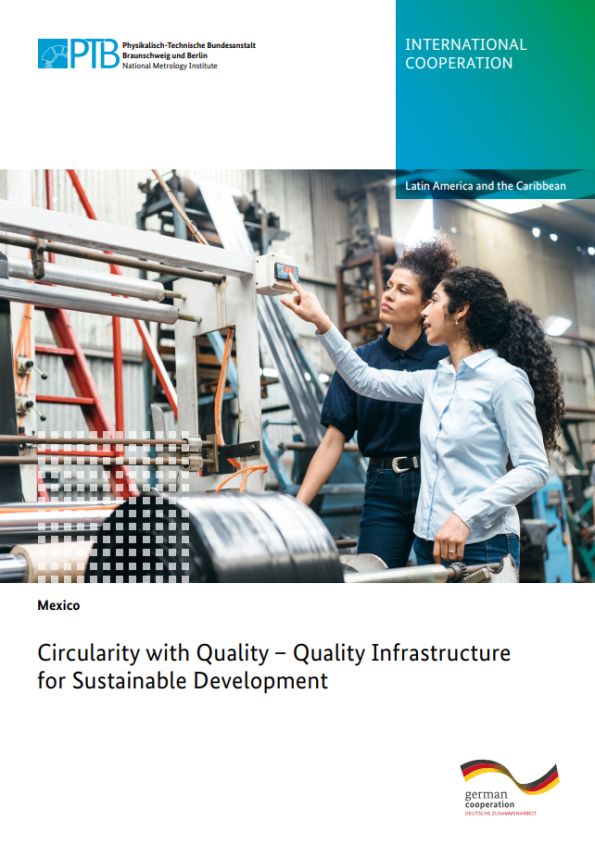
The project supports Mexico and Cuba in transitioning towards a circular economy by enhancing their quality infrastructure—standardization, metrology, accreditation, and conformity assessment. By aligning quality services with circular production needs, the project strengthens environmental monitoring and fosters resource-efficient industrial practices. Through pilot initiatives on plastic recyclability, microplastics, and industrial water reuse—especially in the Mexican state of Querétaro—the project identifies and addresses critical quality assurance gaps. It also promotes regional cooperation and knowledge exchange, particularly with Cuba. Ultimately, this initiative contributes to more sustainable production and consumption, reduced environmental impact, and achievement of the UN Sustainable Development Goals.
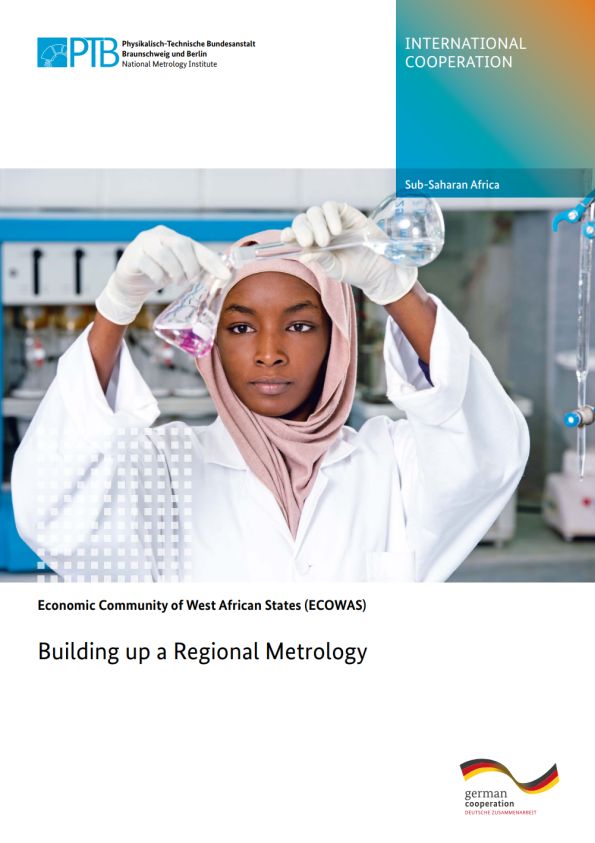
This project supports the Economic Community of West African States (ECOWAS) in developing a coordinated regional metrology system to ensure accurate, reliable, and harmonized measurements across its 15 member countries. By strengthening the ECOWAS Community Committee for Metrology (ECOMET) and supporting national metrology institutions, the initiative addresses critical needs in trade, healthcare, industry, and consumer protection. Through training, technical assistance, and peer-to-peer learning, the project promotes institutional development, regional integration, and service delivery. Improved measurement systems contribute to enhanced productivity, fair trade practices, and increased competitiveness of small and medium-sized enterprises in local and continental markets, especially within the African Continental Free Trade Area (AfCFTA).
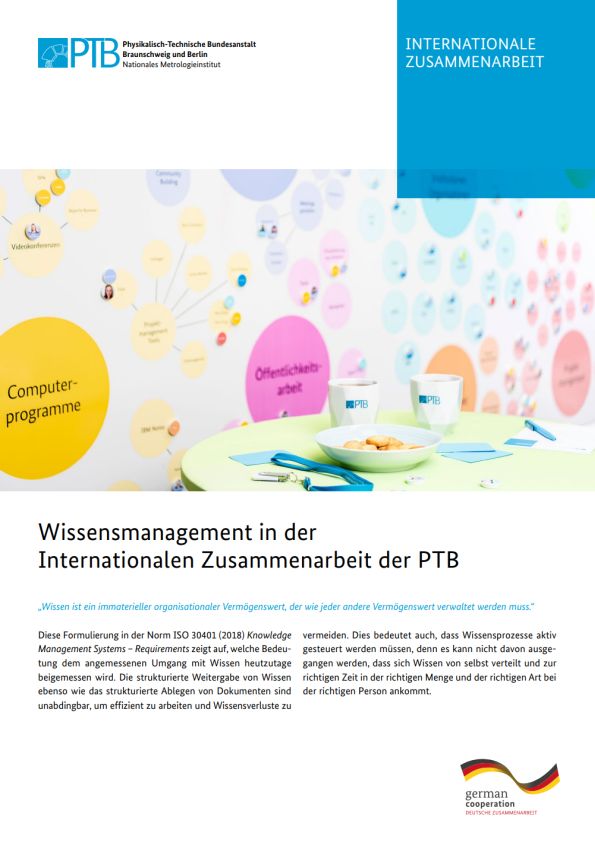
This brochure presents how the Physikalisch-Technische Bundesanstalt (PTB) integrates knowledge management into its international cooperation work. It explains how sharing and preserving knowledge helps improve collaboration, efficiency, and continuity in global development projects. Through tools like wikis, checklists, mentoring, and regular knowledge-sharing meetings, PTB ensures that information is accessible and that valuable experiences are not lost—especially during staff changes. By encouraging a culture of learning, openness, and collaboration, PTB makes knowledge a practical asset in solving real-world challenges and supporting sustainable international partnerships.
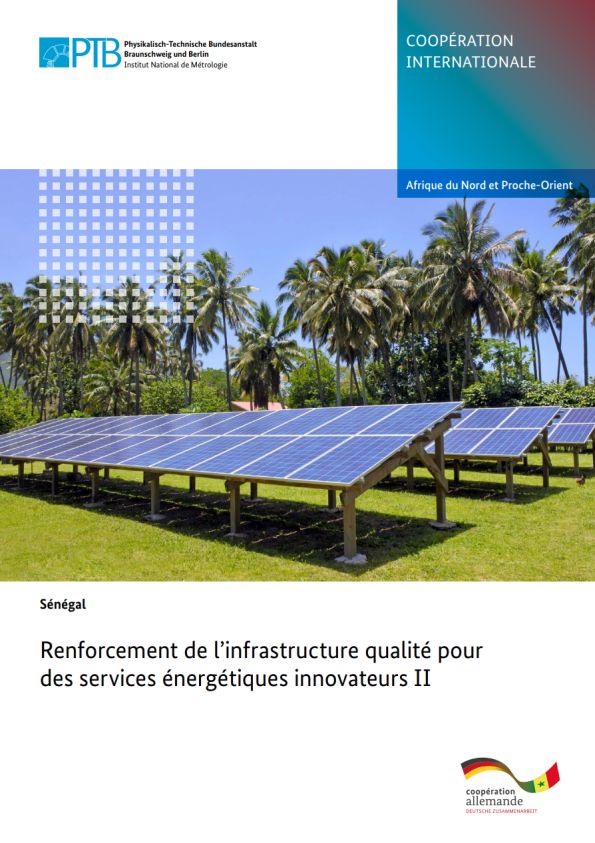
This project aims to enhance the quality infrastructure supporting photovoltaic (PV) systems in Senegal. By improving testing laboratories, training installation companies, and fostering coordination among energy stakeholders, the initiative seeks to build consumer trust and expand access to reliable, high-quality solar energy. Through targeted capacity building and awareness campaigns, the project supports national goals to increase the share of renewable energy, reduce reliance on fossil fuels, and contribute to climate protection under the Paris Agreement. It also promotes social and economic benefits such as improved energy access for households and institutions, reduced energy costs, and job creation.
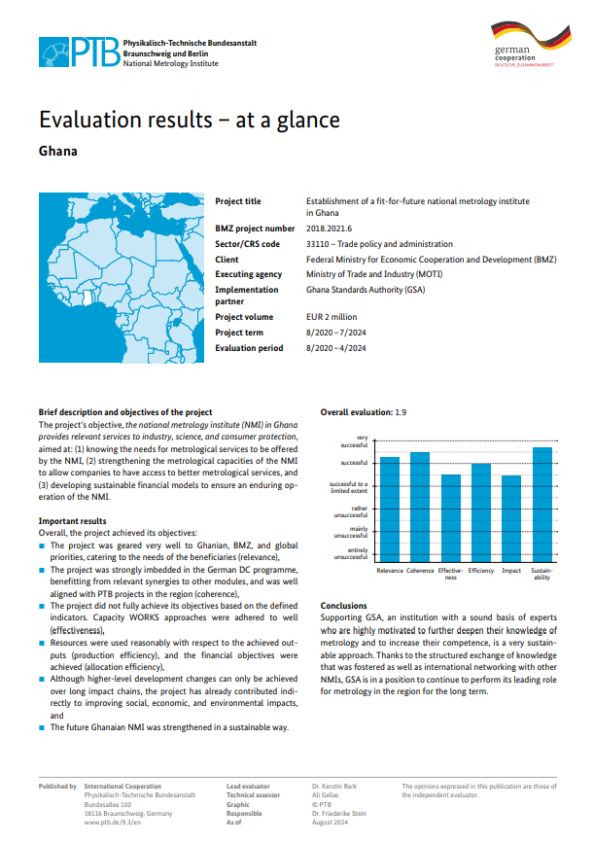
The project aimed to enhance Ghana’s National Metrology Institute (NMI) by identifying service needs, strengthening metrological capacities, and ensuring financial sustainability. This supports industry, science, and consumer protection while securing long-term operational stability.
54 of 75 Pages

 Export Quality Management
The website presents publications related to the regarding the concept of “Export Quality Management”, created by the International Trade Centre (ITC) and PTB.
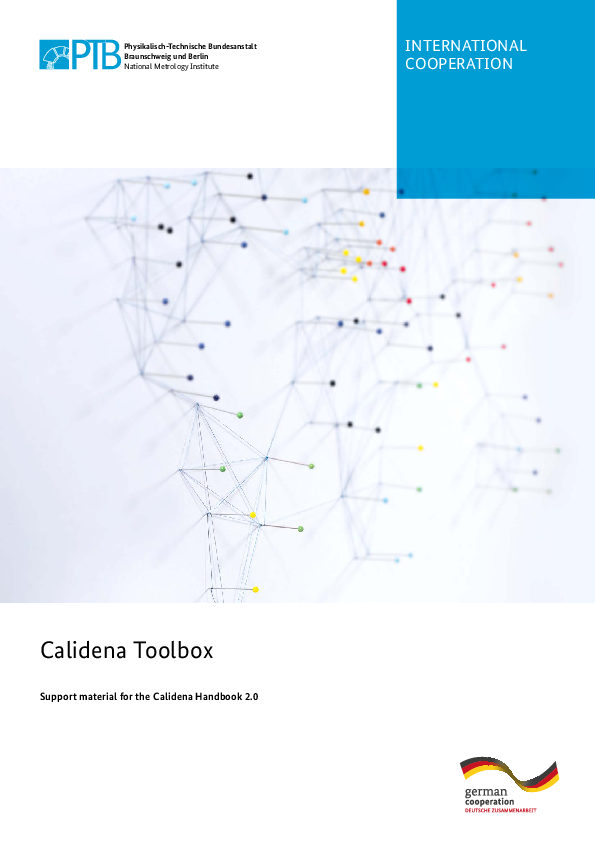
Calidena
The website presents information and publications related to CALIDENA, including a list of facilitators, studies and news.
SEE QI Fund Website
The website is dedicated to the Regional Consultancy Fund for Quality Infrastructure (SEE QI Fund) project and presents related information.
Capacity development online navigator
The Navigator contains many summaries of formats and experiences as well as practical tips and examples which will help you to better prepare and conduct your virtual events.
QI-Africa
The website presents information, news, and publications related to the "Upgrading of Quality Infrastructure in Africa" project.
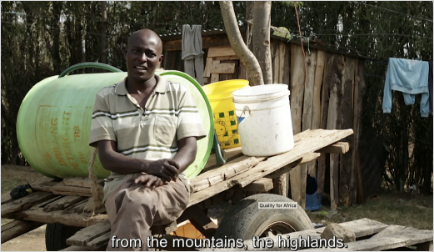 Export Quality Management
The video summarizes the Export Quality Management (EQM) seminars.
Calibrating infrared ear thermometers
Professionals test the accuracy of thermometers prior to sale, and often also perform regular metrological verification tests after the sale.
From the laboratory to sustainable concrete
As part of the Quality Infrastructure Fund project, PTB and Germany’s Bundesanstalt für Materialforschung und -prüfung (Federal Institute for Materials Research and Testing – BAM) created virtual tutorials on the topic of cement
From Farm to Market
The video shows what quality requirements there are for exporting fruit and vegetables in East Africa and how they can be met.
A world without quality infrastructure
Here we show both the effects of a lack of functioning quality infrastructure (QI) and the accidents that functioning QI can prevent.
Assuring Quality during Mango Juice Production – Inspection, Washing and Sorting
The video shows the first stage (inspection, washing and sorting) of mango juice production in Uganda and explains the crucial role of quality assurance.
Assuring Quality during Mango Juice Production – Processing and Pasteurizing
The video shows the second stage (processing and pasteurizing) of mango juice production in Uganda and explains the crucial role of quality assurance.
Assuring Quality during Mango Juice Production – Quality Tests and Packaging
The video shows the third stage (quality tests and packaging) of mango juice production in Uganda and explains the crucial role of quality assurance.